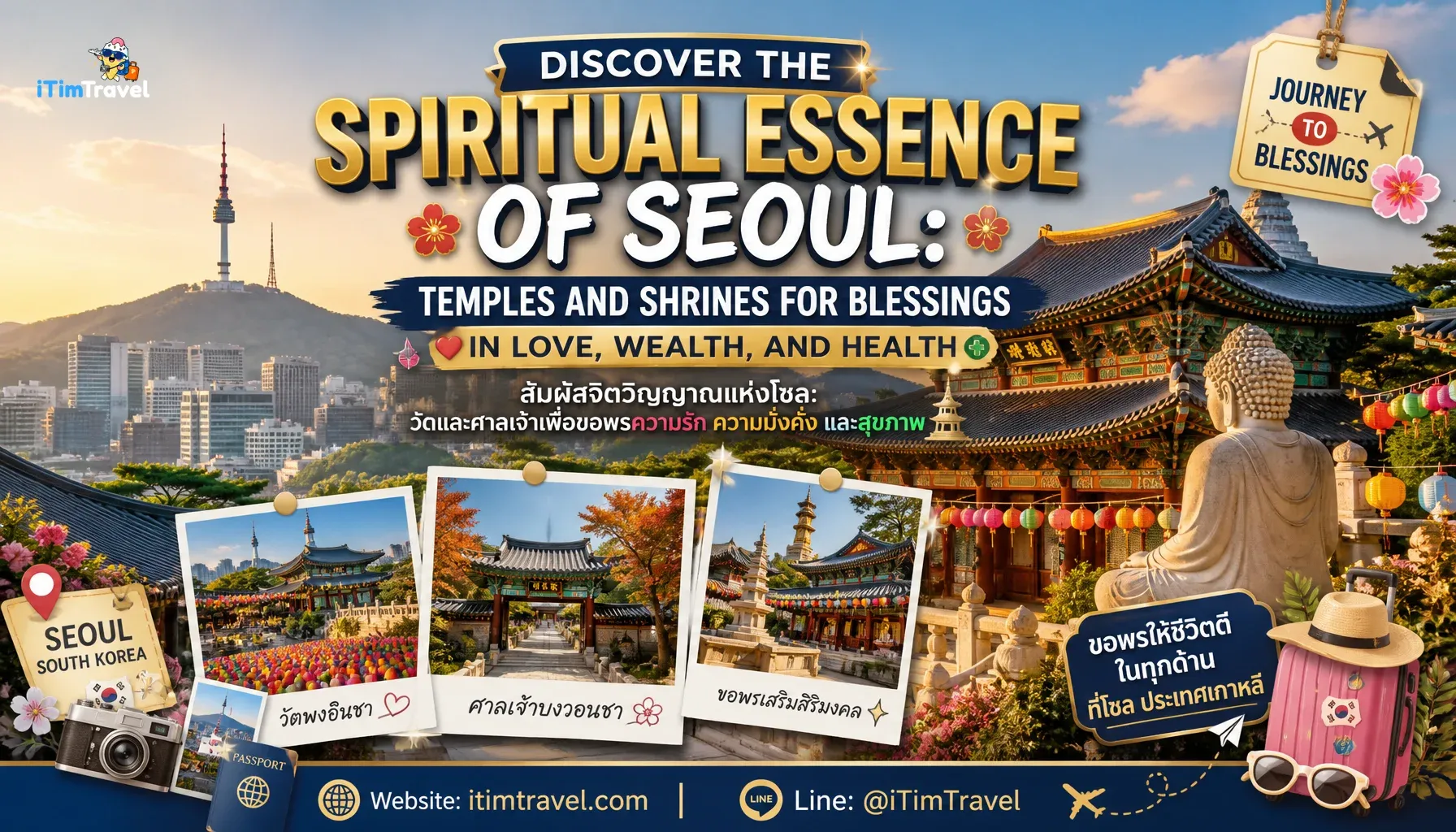
Seoul’s bustling city life doesn’t overshadow its rich spiritual heritage, embedded within its numerous temples and shrines. From the serene Buddhist temples to the mystical Korean shrines, Seoul offers spiritual seekers a place to pray for good fortune, love, wealth, and health. This guide explores how to visit and worship correctly at these sacred sites, delve into their history, and discover the best items to offer for your prayers. Whether you’re seeking blessings in love or prosperity, or simply want to soak in the tranquility, these spiritual landmarks promise a profound experience.
ข้อมูลสำคัญ
| ชื่อสถานที่ | Seoul Temples and Shrines |
| เรื่องที่ควรขอพร | Good fortune, love, wealth, health |
| ของไหว้แนะนำ | Incense sticks, fruits, traditional Korean sweets |
| การเดินทาง | Accessible via subway and local buses |
📑 สารบัญ
- Exploring the Historical Significance of Seoul's Temples
- The Art of Prayer: What to Pray For
- How to Conduct Worship Correctly
- Items to Offer: What You Need
- Success Stories: Belief in the Power of Prayer
- What to Expect: The Atmosphere and Experience
- Travel Tips for Visiting Seoul's Temples
- Conclusion: Why You Should Visit with iTimTravel
Exploring the Historical Significance of Seoul's Temples
Seoul’s temples stand as a testament to Korea’s rich spiritual past. Among the most renowned is the Jogyesa Temple, a Buddhist temple nestled in the heart of Seoul, known for its stunning architecture and vibrant festivals. Its origins date back to the late 14th century and it remains a key center for Zen Buddhism. Another must-visit is Bongeunsa, founded in 794 AD, offering a peaceful sanctuary amid the city’s hustle and bustle. These sites are integral to understanding the practice of prayer rituals and the pursuit of blessings in various aspects of life.
The Art of Prayer: What to Pray For
Prayer at Seoul’s temples and shrines often revolves around universal human desires for love, wealth, and health. When visiting, individuals typically offer prayers for the well-being of family members or blessings in their personal lives. Each shrine has its own unique area of specialization; for example, the Inwangsan Shamanic Shrine is revered for protection and health rituals. Devotees believe that these temples are potent places for manifesting good fortune and fulfilling heartfelt desires.
How to Conduct Worship Correctly
Respect is key when conducting rituals. Start by cleansing your hands at the purification fountain, then proceed to offer incense at the altar. The typical process involves bowing three times, presenting offerings, and a moment of silence for your prayers.
- Purify: Cleanse your hands at the temple’s water source.
- Presentation: Light incense sticks as an offering.
- Prayers: Kneel and focus your intentions on your desires.
- Reflection: Spend a few moments in meditation.
Participating in these prayer rituals with sincerity is believed to invite blessings and prosperity.
Items to Offer: What You Need
Traditional offerings can vary. Common items include incense sticks, flowers, fruits, and traditional Korean sweets like yakgwa. These symbolize purity and prosperity. Before your visit, purchasing these items from local vendors helps support the community while enhancing your spiritual experience. Moreover, these offerings play a crucial role in prayer rituals, signifying respect and readiness to receive blessings.
Success Stories: Belief in the Power of Prayer
Numerous success stories relate to people receiving blessings from their visits. A popular tale involves a businessman who attributes his financial success to regular visits and offerings at Bongeunsa Temple. Similarly, many couples have reported strengthened relationships after visiting the Shilleuksa Temple, which they consider a blessing of the serene environment. Such anecdotal accounts underscore the power of prayer and the belief in the divine interventions of Korean shrines and temples.
What to Expect: The Atmosphere and Experience
As you step into these sacred sites, you’re enveloped by an aura of tranquility. The atmosphere is imbued with the sweet scent of burning incense and the hushed murmurs of monks praying. Visitors can expect self-reflection and a break from the chaos of daily life, as the temples offer a unique blend of history and spirituality. The rituals and architecture of these Buddhist temples provide a serene backdrop for those seeking spiritual solace.
Travel Tips for Visiting Seoul's Temples
Tip: Early mornings provide a serene experience while avoiding the crowds. Dress conservatively to show respect for the sacred spaces.
Traveling to Seoul’s temples is straightforward, with most sites being easily accessible via subway. Remember to respect local customs and adhere to temple etiquette to ensure a meaningful visit. Consider taking a guided tour to fully appreciate the spiritual and historical context, enhancing your experience of these revered Korean shrines.
Conclusion: Why You Should Visit with iTimTravel
Embarking on a spiritual journey through Seoul offers a rare opportunity to connect with both the cultural heritage and your inner self. With its rich blend of history, art, and spirituality, Seoul’s temples and shrines are a must-visit for those seeking enlightenment and blessings. Enhance your spiritual expedition by opting for guided packages like our ทัวร์เกาหลี ปูซาน-คัมชอน, ทัวร์เกาหลี ตกปลาน้ำแข็ง, or ทัวร์เกาหลี ซอรัคซาน to make the most of your journey. Let iTimTravel guide you to a deeper understanding of Seoul’s spiritual charm.
คำถามที่พบบ่อย (FAQ)
❓ How much does it cost to visit temples in Seoul?
Most temples in Seoul are free to enter; however, some may charge a small fee for special exhibitions or events.
❓ What is the best time to visit Seoul's temples?
Early morning is the best time to visit to avoid crowds and experience a peaceful environment.
❓ Are Seoul's temples safe for foreign visitors?
Yes, Seoul's temples are very welcoming and safe for visitors of all nationalities, maintaining traditions of hospitality.
❓ Do I need a visa to visit Seoul, South Korea?
Visa requirements depend on your nationality. Many tourists can enter South Korea visa-free for short stays.
❓ What should I bring when visiting temples in Seoul?
Bring offerings such as incense sticks or flowers. Dress conservatively and bring a water bottle to stay hydrated.
❓ Can I take photos inside Seoul's temples?
Photography rules vary; always look for signs or ask for permission. It is often allowed outside but not during prayer services.
หากกำลังวางแผนเดินทางไปประเทศเกาหลี และอยากจัดเส้นทางให้ครอบคลุมทั้งสถานที่ท่องเที่ยวยอดนิยมและจุดที่น่าค้นหา สามารถดูรายละเอียดแพ็คเกจ ทัวร์เกาหลี ของ iTimTravel เพื่อเปรียบเทียบเส้นทาง ช่วงเวลาเดินทาง และข้อมูลเพิ่มเติมสำหรับการวางแผนทริปได้